Trump admin is ‘trying to put out a fire they started’ at Weather Service as a cold, snowy winter looms

By Andrew Freedman, CNN
(CNN) — The National Weather Service is working to hire back hundreds of positions laid off or otherwise cut by the Trump administration, but it’s progressing at a snail’s pace, with about 80 final job offers accepted for meteorologists, hydrologists and other specialized staff.
The agency received permission in late July to add a total of 450 people after about 550 were cut by DOGE earlier this year. The decision to authorize new hires came after lawmakers and citizens expressed concerns about how the NWS cuts would impact public safety.
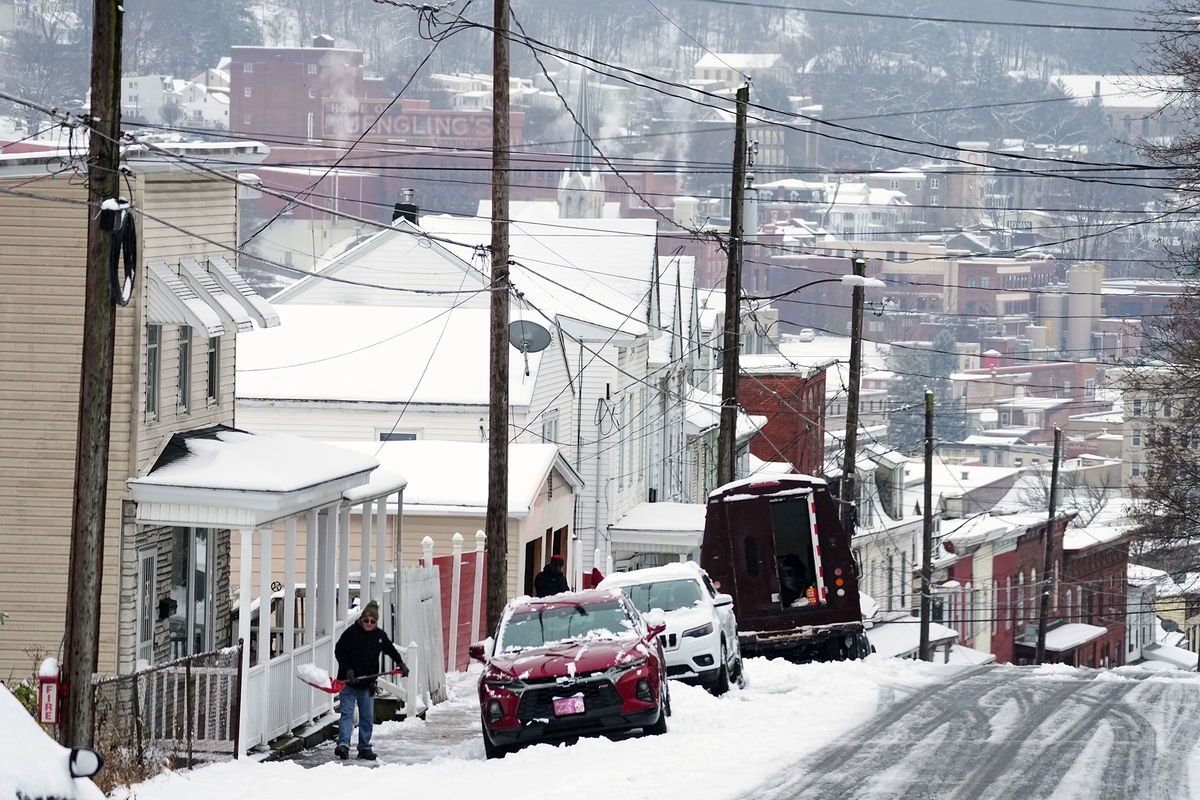
The slow hiring means the Weather Service is going into yet another critical storm season with more than a dozen forecast offices forced to get by with serious staff vacancies, potentially undermining the accuracy of forecasts and warnings during powerful winter storms.
Similar concerns were raised ahead of hurricane season. Hurricanes, including three Category 5 storms, luckily stayed away from making landfall in the U.S.
“The administration is trying to put out a fire that they started,” said Rick Spinrad, who led NOAA during the Biden administration. “The 450 hires for the NWS won’t even cover the full shortfall.”
“Also, let’s not lose sight of the fact that even if NWS could hire 450 people tomorrow,” he said, “there is little chance that they would have the centuries of experience held by their predecessors.”
It takes 13 meteorologists to fully staff a weather forecast office on a 24/7 basis, though many NWS facilities are doing so with just 10 or 11 at the present time, said Tom Fahy, the legislative director for the NWS Employees Organization, the union that represents agency staff. For example, the weather forecast office in Goodland, Kansas is short eight meteorologists, according to statistics Fahy compiled.
He said that the NWS offices in Rapid City, N.D. and Cheyenne, WY are also short 7 or 8 meteorologists, and that, where new people have been hired, those individuals are not all in place. It takes time to move personnel and match peoples’ skillsets with specific gaps in expertise around the country.
Winter storms can be deadly, and short staffing at the NWS has the potential to erode forecast accuracy and delay warnings, experts said.
“I worry that timing, accuracy, and delivery of forecasts, watches, and warnings will degrade to the point of risking lives and property,” Spinrad said. “I envision one or more severe winter storms for which emergency managers, departments of transportation, and hospitals will be less prepared and forewarned than they have been historically,” he said.
“This is not a ‘ding’ on the quality and professionalism of the workforce at NWS, but we just don’t have enough of those heroic public employees to get the job done.”
There is still one forecast office, located in Hanford, Calif., that is too short on staffing to operate 24/7, according to a National Oceanic and Atmospheric Administration (NOAA) official who requested anonymity for fear of retribution. The NWS is part of NOAA within the Commerce Department.
Additional NWS offices don’t have enough staff to launch weather balloons at the standard rate of twice a day, instead going down to one daily balloon launch or missing them altogether. Right now, there are nine NWS offices that are launching balloons at a cadence of once per day, the NOAA official said.
This can have a significant impact on forecasting, since readings on air temperature, humidity, air pressure and winds from these balloons are fed directly into the computer models that forecasters use as guidance for issuing their predictions. Missing weather data on upper air conditions, from the surface to about 40,000 feet, can make those models less reliable.
According to the NOAA official, the Weather Service has been pushing to speed up hiring and has seen a surge of applications for each advertised position. The NWS continued to process candidates during the 43-day government shutdown, they said, given the high priority placed on boosting staffing in order to ensure the agency fulfills its mission of protecting lives and property.
The NOAA official said the agency has announced more than 180 positions so far and will keep hiring next year until the 450 positions are filled. At that point, however, the NWS will still be smaller than it was at the start of the second Trump administration.
NOAA spokesperson Kim Doster told CNN that the NWS is “Properly staffed to meet our mission of predicting weather hazards and providing essential services at all levels to keep communities informed, and we remain fully ready for the winter season ahead.”
“Following the voluntary reassignments of 45 employees to vacant NWS field jobs last summer, the NWS continues to broaden the pool of talent on the front lines of the agency by hiring mission-critical positions where increases in staffing levels have been deemed beneficial,” Doster said.
She said the agency is on track to hire the remaining staff by the end of the 2026 fiscal year.
The-CNN-Wire
™ & © 2025 Cable News Network, Inc., a Warner Bros. Discovery Company. All rights reserved.
