72-year-old Polio Survivor reflects on contracting the long-term virus & COVID vaccines today

EL PASO COUNTY, Colo. (KRDO) -- According to the Centers for Disease Control and Prevention, polio was once one of the most feared diseases in the U.S. In the early 1950s, before polio vaccines were available, polio outbreaks caused more than 15,000 cases of paralysis each year.
Jim Triquet was born in 1950, as polio became one of the most serious communicable diseases among children in the United States. By late October 1954, the United States vaccinated under 2 million children. Unfortunately, just a few months before the vaccine became available, Triquet contracted spinal polio at just 4-years-old.
Triquet says, "I learned I had spinal polio. I was paralyzed from the neck down and it was very contagious, so you were put into a contagious disease ward and you were kind of tightly bound into the bed because you couldn’t control your emotions."
Triquet was initially paralyzed and hospitalized behind a glass wall, and shared a room with another child who died.
He clarified, "My parents were on one side of a window, I was on the other side and nurses would hold phones to your ear so your parents could talk to you. I remember that was my first taste of being afraid and I begged them to take me home, of course they couldn’t. I was just one month before my 4th birthday, so I didn’t understand. Everyday I pleaded for them to take me home."
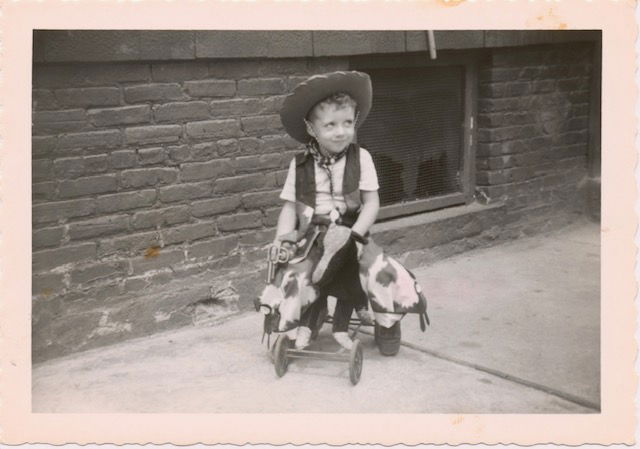
After six weeks in isolation, Triquet was transferred to a hospital for crippled children for rehabilitation.
"I was transferred to a place called Crippled Children’s Hospital in New Jersey, where I spent the next nine months where they were trying to rehabilitate me to walk again. But the doctors didn’t believe that was ever going to occur. But my parents were very strong advocates. They found a physical therapist," adds Triquet.
Over the course of a few years, Triquet had several surgeries and slowly began to use his legs and arms. His mother encouraged him to focus on all the things he can do. "That was the best advice that I could’ve gotten from a parent, which was think of your blessings, think of your abilities, and then do them. Get out there and do them... I never looked at it as it was a rough life. I always found that it was something that I was challenged (with)."
For many years, he lived what many consider a normal life, exploring a passion for swimming, hiking, cycling, racquetball, and golf.


Decades later, the long-term effects of polio were becoming more widely known. Triquet says, "When I turned 50, all of a sudden, all of that weakness started coming back. What they didn’t know back then, like with most viruses, you don’t know what the long-term effects are going to be for those people that you think have survived the devastation. That’s when they discovered a thing called Post-Polio Syndrome."
Post-polio syndrome refers to a cluster of potentially disabling signs and symptoms that appear decades — an average of 30 to 40 years — after the initial polio illness, according to the Mayo Clinic.
"My sister received the vaccine in October (1954) and never contracted the disease. So, 15 seconds of a needle giving vaccine would’ve changed everything in my life. And I look now at what’s going on today, and if somebody said to me, ‘Jim, we can guarantee you’ll never get COVID, ever, ever ever, so you don’t have to take the vaccine, but we can’t guarantee that you won’t transmit it to somebody else…’ I would have to take the vaccine. I would never want to put a young child in a position where they’re torn from their family."
Today, Triquet uses a walker and crutches, bearing through progressive muscle and joint pain but always has a positive attitude.
It’s that kind of discipline of seeking joy that when things are really hard, you know where to go, because diseases close your life. They narrow your world smaller and smaller.
Despite his condition, the 72-year-old is still active in retirement, swimming 2-miles each day to keep his lungs and arms in good condition.
Triquet's message is to live life to the fullest, choose joy and consider science, "It’s simple enough that when science provides you a way to protect your fellow members of your community, you step up and do those things."
According to the CDC, 'Thanks to the polio vaccine, dedicated health care professionals, and parents who vaccinate their children on schedule, polio has been eliminated in this country for more than 30 years.' There is no-year round transmission of poliovirus in the United States. Since 1979, no cases of polio have originated in the U.S.
